How Do I Serve Divorce Papers on Someone Living Overseas?
Serving divorce papers on a spouse who lives in another country is often one of the most time-consuming parts of an international divorce case.
Many people assume they can simply hire a process server overseas or ask a friend to hand the documents to their spouse. In some countries, that approach may not be legally sufficient and could create problems later in the case.
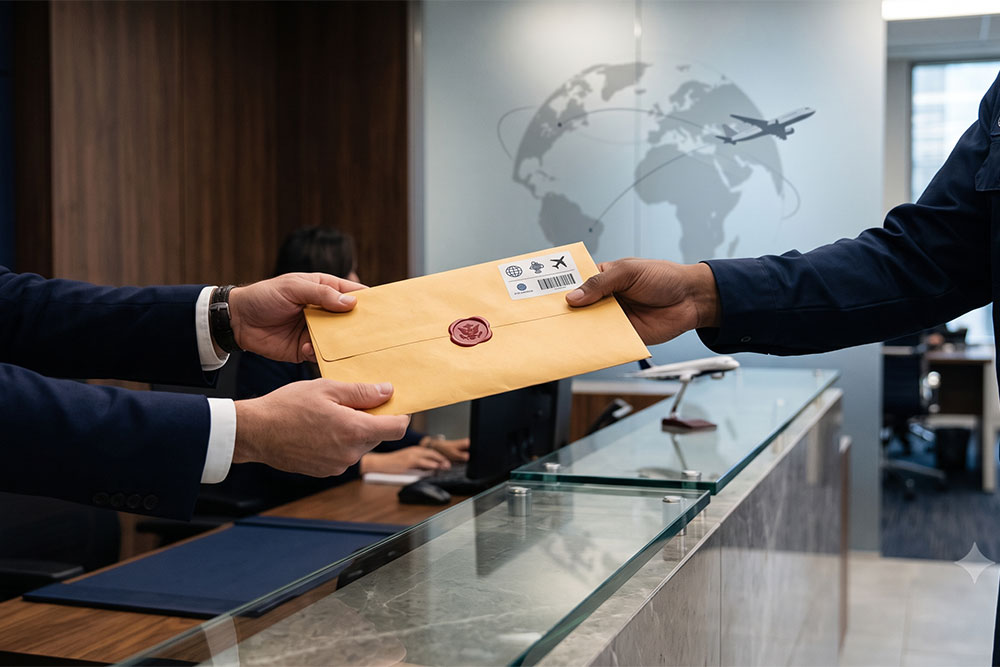
The first step is determining whether the country where your spouse lives participates in international agreements governing service of legal documents. Many countries are parties to international treaties that establish specific procedures for serving court papers across national borders. You would need to contact an attorney in that country to find out the proper procedures for establishing service.
Why Does the Country Matter?
Each country has its own rules regarding how foreign legal documents may be delivered to people within its borders.
In some situations, service must be completed through a government-designated authority in the foreign country. This process can involve translating documents, submitting paperwork through official channels, and waiting for confirmation that service was completed.
Clients are often surprised to learn that international service can take several months—and sometimes significantly longer—depending on the country involved.
Countries That Participate in the Hague Service Convention
If the foreign country participates in the Hague Service Convention, service usually must follow specific international procedures.
In many situations, attempting to serve papers the same way you would serve someone in another U.S. state is not sufficient.
Failure to follow the proper international procedures can result in:
→ Delays
→ Challenges to jurisdiction
→ Difficulty enforcing orders later
Countries That Do Not Participate in the Hague Service Convention
Different rules may apply if the country is not a Hague Service Convention participant.
Alternative service methods may be available, but local laws and international agreements still need to be reviewed carefully.
Can Service Be Waived?
Often, yes.
If the other spouse is willing to cooperate, the process can become much simpler.
Instead of going through formal international service procedures, the parties may be able to use an Acceptance of Service or Joinder. In those situations, the spouse voluntarily acknowledges receipt of the divorce documents and agrees that formal service is unnecessary.
When both parties are cooperative, this approach can save substantial time, expense, and frustration.
What If I Don't Know Where My Spouse Lives?
This issue arises more often than many people realize.
If a spouse's address is unknown despite reasonable efforts to locate them, a court may allow alternative methods of service. Depending on the circumstances, this can include service by publication or other court-approved methods.
Before granting permission for alternative service, courts generally require evidence that reasonable attempts were made to locate the other party.
Is a Notarized Proof of Service Required?
Often yes.
If service is being completed using methods similar to out-of-state service, courts frequently require properly completed proof of service documents, including notarization where required by the applicable rules.
A missing notarization can create problems with the validity of service and may require corrective action before the case can proceed.
Why Proper Service Matters
Service of process is not simply a technical requirement. It is the procedure that gives the court authority to move forward with the case and protects each person's right to receive notice of the proceedings.
If service is not completed correctly, it can create significant delays and may even allow a spouse to challenge court orders later. In some cases, mistakes in service can also affect whether a Washington divorce decree will be recognized and enforced in another country.
For that reason, international service should be addressed carefully at the beginning of the case. Determining the correct procedure early can help avoid unnecessary delays, additional expense, and enforcement problems down the road.




