Family law issues are stressful enough when both spouses live in the same city. When one spouse lives in another state or another country, the legal issues can become significantly more complicated. Many people are surprised to learn that international family law cases often involve multiple courts, international treaties, foreign laws, and special rules about child custody and service of process. They frequently involve overlapping issues of jurisdiction, foreign court proceedings, child custody, property located abroad, and international service requirements. Understanding those issues early can help avoid costly mistakes and unnecessary delays.
So, the better question is often not whether you can get divorced in Washington, but whether Washington is the best place to address all aspects of your situation.
If your marriage crosses borders, here are the questions we hear most often from clients.
Jurisdiction
Can I Get Divorced in Washington If My Spouse Lives in Another Country?
In some cases, yes.
One of the biggest misconceptions about international divorce is that both spouses must live in the same country for a court to grant a divorce. In reality, Washington courts can handle divorces involving spouses who live overseas. If you meet Washington's residency requirements—that is, residing in Washington State at the time the divorce petition is filed—you may be able to file for divorce here even if:
→ Your spouse moved back to another country.
→ You were married abroad.
→ Most of your married life occurred outside the United States.
→ Your spouse refuses to participate in the divorce.
However, obtaining a divorce and resolving all divorce-related issues are not necessarily the same thing.
Divorce Jurisdiction Versus Financial Jurisdiction
A Washington court may have authority to dissolve the marriage but may not automatically have authority over every financial issue.
For example, additional jurisdictional questions may arise if:
→ Your spouse has never lived in Washington.
→ Your spouse owns no property in Washington.
→ Most marital assets are located overseas.
→ A foreign court has already become involved.
In those situations, the court may need to determine whether it can make binding decisions regarding property division, spousal maintenance, or financial obligations.
What If My Spouse Refuses to Cooperate?
Many clients worry that an uncooperative spouse can prevent divorce from moving forward.
Generally, that is not the case.
As long as proper service requirements are met, a spouse cannot usually stop a divorce simply by refusing to participate.
International service may take longer than domestic service, but courts routinely handle cases involving non-responsive spouses.
What If My Spouse Filed for Divorce First in Another Country?
This is one of the most important questions in any divorce case with international elements.
If a divorce or custody action was already filed in another country, the foreign court may have authority over some or all aspects of the case.
The answer often depends on:
→ When each case was filed
→ Whether custody issues are involved
→ Whether any orders have already been entered
→ Whether the foreign court continues to exercise jurisdiction
A Washington court may be able to address some issues while a foreign court handles others.
Competing Courts And Filing First
Does It Matter Which Country Files for Divorce First?
One of the most important strategic issues in an international divorce is determining which court will hear the case. In many situations, both spouses may have the ability to file for divorce in different countries. When that happens, the timing of each filing can become extremely important.
Different jurisdictions may apply different laws regarding property division, spousal maintenance, child custody, and financial disclosure. As a result, the location of the divorce proceeding can significantly affect the outcome of the case.
The existence of multiple proceedings can create complex jurisdictional disputes that require coordination between courts, attorneys, and sometimes legal professionals in multiple countries. In some cases, a Washington court may proceed with certain issues while a foreign court addresses others. In other situations, one court may determine that another jurisdiction is better positioned to handle the dispute.
Because early decisions can have long-term consequences, obtaining legal advice from both countries as soon as an international dispute arises may help preserve important rights and prevent avoidable jurisdictional conflicts.
Recognition Of Foreign Orders
Will Washington Recognize a Divorce or Custody Order Issued by Another Country?
Yes—but not automatically.
Many international families already have court orders from another country before moving to Washington. In those situations, one of the first questions is whether a Washington court will recognize and enforce the foreign order.
Washington courts frequently recognize foreign divorce decrees, custody orders, and support orders under principles of comity, which is the legal doctrine that allows courts to respect judicial decisions made in other countries.
Recognition is not automatic, however. Courts may review whether the foreign proceeding provided adequate notice, a meaningful opportunity to be heard, and basic due process protections before giving effect to the order.
The analysis can become more complicated when the foreign order conflicts with a Washington order, when one party claims the foreign court lacked jurisdiction, or when the foreign proceeding is still ongoing.
Because foreign court systems vary significantly from country to country, every case requires careful review of the foreign court documents, the procedural history, and the laws of the issuing country from attorneys licensed in those specific countries.
Assets Located Abroad
What Happens to Property Located in Another Country?
International divorces often involve assets located outside the United States, such as homes, vacation properties, bank accounts, retirement funds, family businesses, or inherited property.
Many people assume that a Washington court cannot address property located in another country. In reality, Washington courts can often consider foreign assets when determining a fair division of the marital estate because they can have jurisdiction of the owners of the property.

For example, a Washington court may consider the value of a home located in another country when dividing marital property between spouses and make orders concerning the spouses. However, transferring ownership of that property may require additional legal steps in the foreign country.
International business interests can create similar challenges. A spouse may have ownership interests in a foreign company, partnership, or family enterprise that must be evaluated as part of the divorce.
For these reasons, international property division often requires careful planning and, in some cases, coordination with attorneys, accountants, or valuation experts in the foreign country.
Hidden Foreign Assets
What If My Spouse Is Hiding Assets Overseas?
International divorces frequently involve concerns about assets located outside the United States.
A spouse may have foreign bank accounts, overseas real estate, interests in international businesses, offshore investment accounts, cryptocurrency holdings, or other assets that are not immediately apparent from domestic financial records.

Although Washington courts have broad authority to require financial disclosure during divorce proceedings, obtaining information from foreign institutions may require additional legal procedures.
In some situations, attorneys work with forensic accountants, valuation experts, investigators, and foreign counsel to trace assets and verify ownership interests located abroad.
Common warning signs can include unexplained transfers, missing financial records, sudden changes in business ownership, unusual international transactions, or assets held through foreign entities.
Identifying these issues early can help ensure that all marital property is properly considered before the court enters final orders.
Custody Issues
Can Washington Decide Child Custody If My Child Has Lived Here for Years?
Many parents assume that if their child has been living in Washington for a long time, a Washington court automatically has authority to decide custody. Unfortunately, international custody disputes are often more complicated.
In many cases, Washington courts can decide custody when Washington is considered the child's "home state." Generally, a child's home state is where the child has lived with a parent for at least six consecutive months before a custody case is filed.

However, when another state or another country is involved, courts must also determine whether the child's residence is Washington State, whether the child has substantial ties here, whether a custody case has already been filed elsewhere, whether another court has already issued custody orders, and whether that court continues to have jurisdiction over the matter.
Parents are often surprised to learn that a Washington court may have authority to grant a divorce while a foreign court retains authority over custody issues.
What If There Is Already a Custody Order From Another Country?
Foreign custody orders can significantly affect your case.
Even temporary custody orders entered before a parent moved to Washington may impact which court has authority to make future decisions.
The court may consider:
→ Whether custody orders already exist
→ Whether they are temporary or permanent
→ Whether the foreign court remains involved
→ Whether the foreign country's legal system meets recognition standards
Every case requires a careful review of the foreign court documents.
What Is the Hague Convention and Why Does It Matter?
The Hague Convention on the Civil Aspects of International Child Abduction is an international treaty that helps resolve disputes when one parent claims a child was wrongfully removed from or retained outside their home country. It also has provisions regarding the enforcement of child support.
An important point to note is that when a parent waits a significant amount of time before seeking a child's return, the court may consider whether the child has become integrated into a new community and whether the delay affects the requested relief.
What Is the UCCJEA and Why Does It Matter in International Custody Cases?
Washington has adopted the Uniform Child Custody Jurisdiction and Enforcement Act (UCCJEA), which helps determine which court has authority to make custody decisions and helps prevent competing custody orders from multiple jurisdictions.
The UCCJEA generally focuses on the child's home state, but the analysis can also involve prior court orders, emergency circumstances, and whether another court continues to exercise jurisdiction.
In most international cases, foreign countries are treated similarly to U.S. states for jurisdictional purposes. As a result, a Washington court may be required to consider whether a foreign court already has authority over the child before proceeding with a custody case.
Because jurisdictional issues often arise before any custody decision is made, identifying potential UCCJEA concerns early can help avoid conflicting orders, unnecessary litigation, and costly delays.
International Child Support
Can Child Support Be Enforced Across International Borders?
In many cases, yes.
Parents often worry that child support becomes impossible to collect once a parent moves to another state or another country.
Several legal frameworks exist to address cross-border support issues.
Depending on the countries involved, support orders may be recognized, enforced, registered, or modified through interstate laws and international treaties.
The ability to collect support often depends on where the original order was entered, where the parties currently reside, and whether the jurisdictions involved participate in applicable international agreements.
Service Of Process
How Do I Serve Divorce Papers on Someone Living Overseas?
Serving divorce papers on a spouse who lives in another country is often one of the most time-consuming parts of an international divorce case.
Many people assume they can simply hire a process server overseas or ask a friend to hand the documents to their spouse. In some countries, that approach may not be legally sufficient and could create problems later in the case.
The first step is determining whether the country where your spouse lives participates in international agreements governing service of legal documents. Many countries are parties to international treaties that establish specific procedures for serving court papers across national borders. You would need to contact an attorney in that country to find out the proper procedures for establishing service.
Why Does the Country Matter?
Each country has its own rules regarding how foreign legal documents may be delivered to people within its borders.
In some situations, service must be completed through a government-designated authority in the foreign country. This process can involve translating documents, submitting paperwork through official channels, and waiting for confirmation that service was completed.
Clients are often surprised to learn that international service can take several months—and sometimes significantly longer—depending on the country involved.
Countries That Participate in the Hague Service Convention
If the foreign country participates in the Hague Service Convention, service usually must follow specific international procedures.
In many situations, attempting to serve papers the same way you would serve someone in another U.S. state is not sufficient.
Failure to follow the proper international procedures can result in:
→ Delays
→ Challenges to jurisdiction
→ Difficulty enforcing orders later
Countries That Do Not Participate in the Hague Service Convention
Different rules may apply if the country is not a Hague Service Convention participant.
Alternative service methods may be available, but local laws and international agreements still need to be reviewed carefully.
Can Service Be Waived?
Often, yes.
If the other spouse is willing to cooperate, the process can become much simpler.
Instead of going through formal international service procedures, the parties may be able to use an Acceptance of Service or Joinder. In those situations, the spouse voluntarily acknowledges receipt of the divorce documents and agrees that formal service is unnecessary.
When both parties are cooperative, this approach can save substantial time, expense, and frustration.
What If I Don't Know Where My Spouse Lives?
This issue arises more often than many people realize.
If a spouse's address is unknown despite reasonable efforts to locate them, a court may allow alternative methods of service. Depending on the circumstances, this can include service by publication or other court-approved methods.
Before granting permission for alternative service, courts generally require evidence that reasonable attempts were made to locate the other party.
Is a Notarized Proof of Service Required?
Often yes.
If service is being completed using methods similar to out-of-state service, courts frequently require properly completed proof of service documents, including notarization where required by the applicable rules.
A missing notarization can create problems with the validity of service and may require corrective action before the case can proceed.
Why Proper Service Matters
Service of process is not simply a technical requirement. It is the procedure that gives the court authority to move forward with the case and protects each person's right to receive notice of the proceedings.
If service is not completed correctly, it can create significant delays and may even allow a spouse to challenge court orders later. In some cases, mistakes in service can also affect whether a Washington divorce decree will be recognized and enforced in another country.
For that reason, international service should be addressed carefully at the beginning of the case. Determining the correct procedure early can help avoid unnecessary delays, additional expense, and enforcement problems down the road.
Immigration Concerns
Does My Immigration Status Affect My Divorce or Custody Rights?
Generally, no.
Immigration status does not automatically prevent someone from:
→ Filing for divorce
→ Seeking custody orders
→ Requesting child support
→ Defending against a custody-related claim
→ Participating in Washington court proceedings
Family courts focus on family law issues, not immigration enforcement.

Recognition Of Washington Orders Abroad
Will My Washington Divorce Be Recognized in Another Country?
Not automatically.
Some countries require additional documentation before recognizing a U.S. divorce decree.
Depending on the country involved, you may need:
→ Certified copies
→ Apostilles
→ Authenticated court records
→ Additional legal certifications
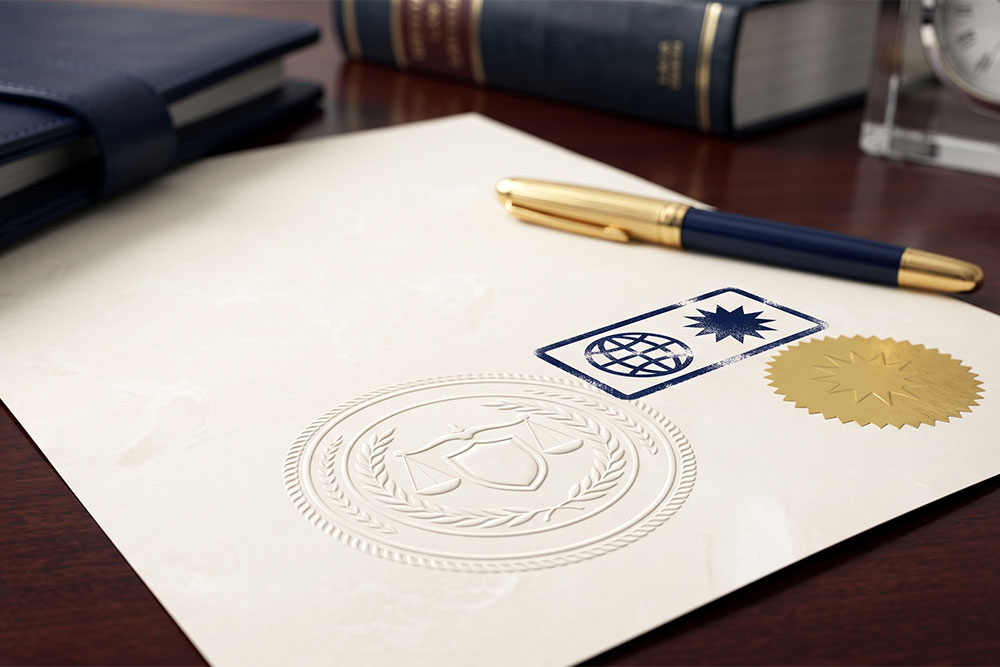
If you own property overseas, expect future inheritance issues, or you may need to prove your marital status abroad, these requirements should be addressed early in the process with foreign attorneys.
Proper Representation
Do I Need a Lawyer Who Handles International Family Issues?
International divorce cases involve issues that many family law attorneys encounter only occasionally.
Your case may involve:
→ Washington law
→ Federal law
→ International treaties
→ Foreign court orders
→ Cross-border custody disputes
→ International service requirements
A mistake that seems minor at the beginning of a case can have consequences across multiple countries and court systems.
Working with an attorney or team of attorneys who understands the unique challenges of international family issues can help protect your rights and avoid costly delays.
How We Can Help
International family cases often involve much more than a divorce. Questions about jurisdiction, international child custody, Hague Convention proceedings, foreign court orders, overseas property, immigration concerns, and international service requirements can all arise in the same case.
At Universal Legal, we help clients navigate the legal and practical challenges that come with cross-border family law disputes. Whether your spouse lives in another country, your child has connections to multiple jurisdictions, or you are trying to determine which court has authority to hear your case, we can help you understand your options in the law and develop a strategy tailored to your family's circumstances. It may require the help of a team of family law attorneys from other countries, but we can help you with the process in Washington State.